Showing posts with label books. Show all posts

Thursday, February 2, 2012

Author 2.0 Blueprint - Great Resource for Indie Authors from Joanna Penn

 id=Just wanted to let you know today about a free, 52-page e-book from prolific author and blogger Joanna Penn.

Joanna describes Author 2.0 Blueprint as 'Your Blueprint for Writing, Publishing and Marketing Your Book'. It's a beautifully written and produced introduction to self-publishing, covering both fiction and non-fiction.

The e-book is a fully updated, 2012 version of Joanna's original Author 2.0 report. It’s based on articles from her blog The Creative Penn, as well as information from other blogs. There are links to many sites and blogs Joanna says she has found useful herself. The book also recommends further resources, some free and some paid-for, for additional advice and assistance.

Author 2.0 Blueprint is published under a Creative Commons licence, so it can be freely shared as long as you don’t use it commercially and you cite TheCreativePenn.com as the source. I've therefore taken the opportunity to embed it below, or you can visit the announcement page on Joanna's blog and download it from there if you prefer...
Author 2.0 Blueprint: Writing, Publishing and Book Marketing using online tools (2012 version)

If you are receiving this post by email or RSS, you may need to visit my blog to see the embedded version of the e-book. Also, if you can't read the embedded version clearly - and I can't control how exactly it will display on different browsers - click on the 'View in Fullscreen' icon at the bottom. You can return to this blog post afterwards by using your browser's 'Back' button.

Thank you very much to Joanna for making this valuable resource available to the world-wide writing community.

Finally, while we're talking about freebies, you might also like to sign up for The Writer's Giveaway by my blog sponsors, The WCCL Network. This features a wide range of free, writing-related reports and software. All you have to do in exchange is sign up for their Smart Writers e-newsletter (to which you can, of course, unsubscribe at any time). Just click on the banner below for more information!


Wednesday, January 25, 2012

PLR Time for UK Authors

 id=If you're a UK author registered for PLR, you can now check your earnings for 2010/11 on the UK PLR website. Just log in here and click on My Statement.

This year (July 2010 to June 2011) they are paying 6.05 pence per library loan, with payment due between 13 and 24 February 2012.

For those who don't know, PLR stands for Public Lending Right. The UK PLR Office distributes money to UK authors based on the number of times their books have been borrowed from public libraries in Britain in the last year. This money is paid to authors as compensation for their presumed lost royalties on sales.

All UK authors are eligible for PLR (even if they don't currently live in Britain), but you do have to register with the UK PLR Office first. If you're a UK author with at least one published book to your name, therefore, you should sign up immediately to get what is due to you.

Non-UK nationals cannot claim from the UK PLR Office, but many other countries (though not the USA) have schemes in place to compensate writers for library lending. As I discovered in my recent interview with Ruth Barringham, Australia has what appears to be quite a generous program, though payments are based on the estimated number of copies of an author's book in libraries, not total loans. For more information on PLR schemes worldwide, visit the PLR International website.

In many countries there are also reciprocal arrangements to compensate non-nationals for lending in the country concerned. In Britain this is co-ordinated by ALCS (the Authors' Licensing and Collecting Society), and UK authors should also register separately with them. ALCS also pay out photocopying fees to authors, incidentally.

I always find it interesting to study my PLR statement. One message that comes across very clearly in my latest one is that public libraries are cutting back on buying new books. By far my highest-earning titles for PLR are those published 5 to 10 years ago. My recent titles have fewer loans and some none at all, suggesting that not many libraries have them in stock. But even my oldest books, published up to twenty years ago, are still being borrowed in some libraries. Those copies must be pretty dog-eared by now!

Over the years I have made literally thousands of pounds from PLR payments; in the case of some books I have earned more from PLR than I have in publisher fees or royalties. So if you're a UK author, it is definitely worth taking the few minutes needed to register yourself and your book/s at the UK PLR site. Otherwise, you really are leaving money on the table!

Photo Credit: Stacks by Nrbelex on Flickr. Reproduced under Creative Commons Attribution-ShareAlike 2.0 Generic Licence.


Thursday, January 19, 2012

How to Use Incentives to Get Extra Sales

 id=
Today's guest post is by Jimmy D. Brown of the website iBusiness Owner.

Jimmy is talking about a subject that I'm sure will resonate with many self-publishers, and especially with buyers of my 10-Day E-Book course (which discusses writing and publishing a money-making e-book on ClickBank).

Take it away, Jimmy...

* * *

The vast majority of your prospects aren’t all that passionate about your offer.

Truth is, they’re kind of lukewarm. They’re interested, but they’re not taking their credit card out. Instead of making a buying decision, they decide to “think about it.”

Of course you know what happens: They forget about your offer. They don’t return to your store or sales page. Some of them may even make the conscious decision to NOT buy your product.

So what can you do to get your prospects to get excited and take action NOW?

Simple: Offer them an incentive if they order now. Do it right, and you’re virtually guaranteed to make more sales!

Generally, an incentive can take two forms:

  1. You offer a discount. One idea is the straightforward discount, such as offering a percent-off. Another ideas is to offer a discount on the overall package, such as by offering free shipping.

Tip: You can even make it a limited-time discount so that your prospects feel a sense of urgency.

  1. You offer one or more bonus products. Again, you can even make the bonus offer limited to increase the sense of urgency.

Offering a discount is a pretty straightforward incentive. So let’s talk about how to offer a bonus as a buying incentive.

Here then are the seven keys to offering bonuses that generate extra sales:

• Make sure the bonus is desirable. Point is, if your prospects don’t care about the bonus product, then it won’t help you generate any sales. So make sure it’s something that your prospects already want. Something that gets them excited!

• Create a valuable bonus. Just because you’re giving the product away for free with a purchase doesn’t mean this bonus should be worth little to no money. Quite the contrary – it should have a high perceived value in the prospect’s mind.

• Choose bonuses that are easy to deliver. This is particularly true if you’re selling downloadable products online, such as software or information. Point is, you want to be able to deliver the bonus instantly – right alongside the main product – without you having to manually deliver the bonus.

• Supply an exclusive bonus, whenever possible. If the prospect can get the bonus somewhere else, he might just do that. So try to offer exclusive bonuses to help make the buying decision easy.

• Offer a bonus that compliments the main product. For example, let’s say you’re selling a book about retirement planning. Offering retirement-planning worksheets and software as a bonus would be a great incentive.

• Sell the bonus. If you’re selling via a sales page, don’t just list the bonus. Instead, sell it just the way you’re selling the main product, meaning you should list the benefits of this bonus product or service.

• Remember that you can offer products OR services. Let’s say you’re selling exterior landscaping supplies and information. As a bonus you can offer a free consultation where you provide specific landscaping ideas for buyers. Or if you’re selling a copywriting product, you can offer a sales letter critique.

Conclusion

Offering an incentive is a simple, yet highly effective way to generate more sales and grow your business. To discover still more ways to grow your business, visit http://tinyurl.com/6rtt8sl – you may just learn strategies you never even knew existed!

* * *

Thank you to Jimmy for an interesting article.

I do agree that offering extra bonuses is a powerful selling technique. My publishers, WCCL, always include a few extra bonuses with the products and courses they offer. In addition - as with my Kindle Kash course - I quite often add a few extra bonuses myself when people order from me personally!

If you have any comments or questions about this post, as ever, feel free to leave them below.

Photo Credit: Scared Candy by Enokson on Flickr. Licensed under CC Attribution 2.0 Generic Licence.


Thursday, January 12, 2012

Five Literary Devices to Make You a Better Writer

 id=
I'm pleased to welcome to my blog today writer and blogger Chris Campbell.

Chris believes that writers in all genres, fiction and non-fiction, can improve their work through the judicious use of literary devices...

* * *

While the fiction writer often uses literary devices to move his story along, these writer's tricks are not limited to fiction. A non-fiction writer working on a blog or a feature article can utilize them as well to infuse a story with life and action.

Metaphor

Very often the best way to help people understand something or someone is to use metaphor. Metaphor involves the pairing and comparison of two things that are unrelated, but give the reader deep insight into the person or thing being described. For example, in "The Heart of Darkness" by Joseph Conrad, the metaphor "In exterior he resembled a butcher in a poor neighborhood" reveals that the manager's uncle is a rough character. He's used to living a hard life on the streets without directly saying as much. While a writer can literally tell the reader that he has these qualities, metaphor offers a richer and more visceral glimpse of the person.

Anthropomorphism

Anthropomorphism relies on the principles of metaphor, but in a specific way. The definition used to pertain to giving human-like qualities to a deity or god, but now is largely used for any inanimate object. An author trying to explain conditions leading up to a hurricane might use a sentence like this to set the scene, "The unrelenting storm battered the travelers back with vicious sheets of rain as they prayed for the vengeful skies to clear." This tool provides a dimension of character to an otherwise mindless force or object.

Foreshadowing

The prophesies of the three witches in Shakespeare's "Macbeth" provide a good example of how a writer can use foreshadowing. Macbeth consults with the three several times throughout the play. However, their latter prophesies are ignored, because they don't seem to make sense. The quote "The power of man, for none of woman born/ Shall harm Macbeth" foreshadows MacDuff who was taken c-section, so he was technically not born of a woman. Using foreshadowing sets the story up for the readers, giving them an invisible framework for understanding not only the story, but more specifically where things are headed for a particular character.

Doppelganger

Dr. Jekyll and Mr. Hyde represent one of the most famous examples of the doppelganger in literary history. This device allows a writer to explore the two sides to a person's character and often has a supernatural element to it. Additionally, a doppelganger can also foretell of a tragedy that will befall a person; the doppelganger that appears to the dying person can be that person's future spirit self foretelling of the character's demise.

Archetypes

Archetypes represent universal character types, offering the writer the ability to quickly develop a character. For example, Romeo and Juliet not only symbolize tragic, eternal love. A feature writer who refers to Shakespeare's famous couple tells the reading audience that the people in the writer's own story are doomed lovers as well.

Conclusion

A writer - regardless of the genre - can create mood and characters more quickly and realistically if she uses a few literary devices. This is especially valuable to the writer who's limited by the constraints of a short piece of writing.

About the author: Chris Campbell is a blogger for GradeSaver, who really enjoys writing posts about reading, literature, and learning.

* * *

Thank you to Chris for an interesting article. I agree that the careful use of literary devices such as those mentioned can lift a piece of writing from the ordinary to the memorable.

My one extra tip would be to strive to ensure that any such devices you use are original (one definition of a cliche is an over-used figure of speech) and apt. Forced metaphors that don't really work are a particular embarrassment!

If you have any comments or questions for Chris or myself, as always, please feel free to leave them below.

Photo Credit: Double, Double, Toil and Trouble by Jeff Hitchcock on Flickr. Reproduced under Creative Commons Attribution 2.0 Generic Licence.


Sunday, December 18, 2011

Cover Story: Should Writers Create Their Own E-Book Covers?

Today I'm pleased to bring you another guest post by MWB regular David Robinson.

David is a successful self-publishing author. In this post he addresses the question of whether writers can - or should - create their own e-book covers.

* * *

Never judge a book by its cover. How old is that advice? How valid is it? The first point of contact we all have with many books is the cover, and getting it right can be a struggle.

As usual there is plenty of advice out there, and it usually runs like this:

  • Ensure your cover reflects a scene from the book.
  • Have your cover professionally prepared.
  • Don't use cheap and tacky images manipulated on Photoshop.

I checked the Kindle bestsellers. With a few exceptions, the covers do NOT reflect a scene from the book. They may reflect the THEME, even the TITLE, but they do not indicate a single scene. In many instances, the covers are abstract.

This problem is perhaps less critical when it comes to selling non-fiction. Nick's book Start Your Own Home-based Business has a large question mark in the centre of the cover which, on closer inspection, looks like the interior of a house. It's attractive without being specific, and for me, that's what a cover should aim for. My own non-fiction title, E-book Formatting & Publishing on the Kindle, shows a screen shot of a Word document.

Can you apply this kind of abstract simplicity to novels? You can, and most authors/publishers do.

The cover of the first title in my Sanford Third Age Club (STAC) Investigates series, A Death at the Seaside, shows a seaside scene. It suggests a traditional British seaside summer holiday. The title does the rest. It does not relate to any particular scene from the novel, and it doesn't even relate to murder.Link

 id=
This image (along with all my covers) also broke the first two "rules". It was not professionally prepared, and it was done on Photoshop.

The background image from A Death at the Seaside was taken from a rooftop cafeteria in Bridlington using a Sony a200 DSLR camera and a 200mm lens. The original was manipulated on Photoshop to enrich the colours, and the shadow edges were added as a trademark of the Sanford Third Age Club Investigates series. Does it work? A Death at the Seaside is my bestseller.

Here's another example, from a series of sci-fi novels I'm planning for next year.


 id=
This, too, was prepared on Photoshop and it spells out exactly what the novel is: a sci-fi adventure. But how was it put together?

The background is a starfield which I downloaded from the web. I installed a lens flare on it, which I then altered to appear as the distant, yellow sun. The planet is an image of Uranus which I also downloaded from the web, and then manipulated to turn it emerald green and darken most of the disc. The asteroid landscape, which doesn't show up too well in such this small example, is a photograph I took when visiting the Mt Teide National Park, on Tenerife in the Canary Islands (below). The area is known for its almost lunar appearance.

 id=

I clipped this landscape from this picture, eliminating the sky, pasted it into place, and adjusted the lighting.

Even without titles, a potential reader looking at this thinks "sci-fi", and acts accordingly. Sci-fi lovers will look closer, sci-fi non-lovers will move on.

Cover artists will shout, "I could have done better," and they're probably right, but as an independent writer/publisher, I have economic considerations to take into account.

I checked out a number of artists, and their prices ranged from $100 to $1000. I'm not criticising those figures. Artists place a value on their time and skill and I would not question them, but I make, on average, $1 per title sold (as little 30ȼ on the cheaper titles, as much as $2 on the more expensive ones). Even at the lower end of the price list I would have to sell 100 copies just to break even. And that doesn't take account of editing costs, which I'm already paying out.

Realistically, to break even, I'd need to sell 200-300 copies if I used a bottom-end artist. At the top end, I'll have to sell 2000+ copies, simply to break even.

I sell books. My titles do fairly well, but nothing mega. Would I sell more with a professionally designed cover? Perhaps, but I don't see that increase catapulting me into the major league, and it just does not make economic sense.

Apologies to all you advisors. I believe you have a point, but for now I'll stick with my own imagination and Photoshop.

This will be my last guest appearance on this blog for 2011, so I would like to take this opportunity to wish Nick and all his readers a Merry Christmas and a Happy, successful New Year.

Byline: David Robinson is an independent freelance writer and novelist with 15 titles available through the Kindle and Smashwords. Visit his website at http://www.dwrob.com.

* * *

Thank you to David for another excellent and inspiring guest post.

So have you created your own e-book cover, or do you think it's better to hire a professional? Please leave any comments or questions for David (or me) below.


Cover Story: Should Writers Create Their Own E-Book Covers?

Today I'm pleased to bring you another guest post by MWB regular David Robinson.

David is a successful self-publishing author. In this post he addresses the question of whether writers can - or should - create their own e-book covers.

* * *

Never judge a book by its cover. How old is that advice? How valid is it? The first point of contact we all have with many books is the cover, and getting it right can be a struggle.

As usual there is plenty of advice out there, and it usually runs like this:

  • Ensure your cover reflects a scene from the book.
  • Have your cover professionally prepared.
  • Don't use cheap and tacky images manipulated on Photoshop.

I checked the Kindle bestsellers. With a few exceptions, the covers do NOT reflect a scene from the book. They may reflect the THEME, even the TITLE, but they do not indicate a single scene. In many instances, the covers are abstract.

This problem is perhaps less critical when it comes to selling non-fiction. Nick's book Start Your Own Home-based Business has a large question mark in the centre of the cover which, on closer inspection, looks like the interior of a house. It's attractive without being specific, and for me, that's what a cover should aim for. My own non-fiction title, E-book Formatting & Publishing on the Kindle, shows a screen shot of a Word document.

Can you apply this kind of abstract simplicity to novels? You can, and most authors/publishers do.

The cover of the first title in my Sanford Third Age Club (STAC) Investigates series, A Death at the Seaside, shows a seaside scene. It suggests a traditional British seaside summer holiday. The title does the rest. It does not relate to any particular scene from the novel, and it doesn't even relate to murder.Link


This image (along with all my covers) also broke the first two "rules". It was not professionally prepared, and it was done on Photoshop.

The background image from A Death at the Seaside was taken from a rooftop cafeteria in Bridlington using a Sony a200 DSLR camera and a 200mm lens. The original was manipulated on Photoshop to enrich the colours, and the shadow edges were added as a trademark of the Sanford Third Age Club Investigates series. Does it work? A Death at the Seaside is my bestseller.

Here's another example, from a series of sci-fi novels I'm planning for next year.


This, too, was prepared on Photoshop and it spells out exactly what the novel is: a sci-fi adventure. But how was it put together?

The background is a starfield which I downloaded from the web. I installed a lens flare on it, which I then altered to appear as the distant, yellow sun. The planet is an image of Uranus which I also downloaded from the web, and then manipulated to turn it emerald green and darken most of the disc. The asteroid landscape, which doesn't show up too well in such this small example, is a photograph I took when visiting the Mt Teide National Park, on Tenerife in the Canary Islands (below). The area is known for its almost lunar appearance.

I clipped this landscape from this picture, eliminating the sky, pasted it into place, and adjusted the lighting.

Even without titles, a potential reader looking at this thinks "sci-fi", and acts accordingly. Sci-fi lovers will look closer, sci-fi non-lovers will move on.

Cover artists will shout, "I could have done better," and they're probably right, but as an independent writer/publisher, I have economic considerations to take into account.

I checked out a number of artists, and their prices ranged from $100 to $1000. I'm not criticising those figures. Artists place a value on their time and skill and I would not question them, but I make, on average, $1 per title sold (as little 30ȼ on the cheaper titles, as much as $2 on the more expensive ones). Even at the lower end of the price list I would have to sell 100 copies just to break even. And that doesn't take account of editing costs, which I'm already paying out.

Realistically, to break even, I'd need to sell 200-300 copies if I used a bottom-end artist. At the top end, I'll have to sell 2000+ copies, simply to break even.

I sell books. My titles do fairly well, but nothing mega. Would I sell more with a professionally designed cover? Perhaps, but I don't see that increase catapulting me into the major league, and it just does not make economic sense.

Apologies to all you advisors. I believe you have a point, but for now I'll stick with my own imagination and Photoshop.

This will be my last guest appearance on this blog for 2011, so I would like to take this opportunity to wish Nick and all his readers a Merry Christmas and a Happy, successful New Year.

Byline: David Robinson is an independent freelance writer and novelist with 15 titles available through the Kindle and Smashwords. Visit his website at http://www.dwrob.com.

* * *

Thank you to David for another excellent and inspiring guest post.

So have you created your own e-book cover, or do you think it's better to hire a professional? Please leave any comments or questions for David (or me) below.


Sunday, December 11, 2011

Review: Virtual Book Tour Magic

 id=Last week I was pleased to host Dana Lynn Smith (The Savvy Book Marketer) on her virtual book tour to promote her new writers' guide Virtual Book Tour Magic.

If you missed Dana's guest post, you can click through here to read it (will open in a new window). As promised in that post, here is my review of the guide itself...

Virtual Book Tour Magic is provided in the form of a downloadable, 73-page PDF, with three extra bonus items. My first impression was that it lives up to and even exceeds the standard of Dana's other writers' guides (listed at the foot of this post).

The text uses a clean, sharp, readable font, accompanied by screengrab illustrations where appropriate. As with Dana's other manuals, I was pleased to see that the table of contents is fully hyperlinked, not just to the main chapter headings, but to the section headings as well. It's a pity that not all e-books adhere to this format.

Virtual Book Tour Magic takes readers step by step through planning and executing a VBT (as I'll call it from now on). Not unnaturally, it begins with an explanation of what these events are.

I thought I would find this all very familiar, but actually I learned some interesting things, including the fact that there are (at least) five different types of VBT. Dana also sets out in this chapter some compelling reasons why all authors should consider organizing VBTs to promote their titles.

The guide goes on to explain how to plan your VBT, and how to research and recruit the best tour hosts. This very important information is set out in a concise and systematic way, with plenty of bullet-point lists to aid readability.

Dana goes on to discuss communicating effectively with tour hosts and how to produce killer content for your tour (articles, interviews, and so on). She also discusses how you can build buzz around the tour with contests, giveaways and special offers. I found this chapter particularly interesting, especially the section where she talks about running a Twitter contest. This is definitely something I plan to do myself before too long, whether as part of a VBT or not!

There is also a chapter about promoting your tour, which again I found enlightening. Having been a blog host on several of Dana's own VBTs, it's interesting to see how much work goes into promoting a tour (as well as planning and running it) from the organizer's perspective.

Virtual Book Tour Magic concludes by looking briefly at post-tour activities, the potential pitfalls of running a VBT, and the alternative option of hiring someone to organize your VBT for you. There is also, as you might expect, a section of useful resources, both free and paid for.

 border=Overall, I was highly impressed with Virtual Book Tour Magic, which (as I mentioned earlier) more than maintains the high standard of previous authors' guides by Dana Lynn Smith (pictured).

It does also, I think, demonstrate that organizing a VBT is not a project to be undetaken lightly. If you're going to do one, however - and as Dana says, the potential rewards in terms of raising awareness of your book are massive - following the guide's step-by-step advice should ensure you avoid the pitfalls and organize a successful, relatively stress-free, and ultimately profitable tour.

For more information about Virtual Book Tour Magic (and to order a copy) just click through any of the links in this review. You can also read my reviews of other guides by Dana by clicking on the appropriate title in the list below:

How to Get Your Book Reviewed

Twitter Guide for Authors

Facebook Guide for Authors

If you have any comments or questions for Dana (or me), as ever, please feel free to leave them below!


Review: Virtual Book Tour Magic

Last week I was pleased to host Dana Lynn Smith (The Savvy Book Marketer) on her virtual book tour to promote her new writers' guide Virtual Book Tour Magic.

If you missed Dana's guest post, you can click through here to read it (will open in a new window). As promised in that post, here is my review of the guide itself...

Virtual Book Tour Magic is provided in the form of a downloadable, 73-page PDF, with three extra bonus items. My first impression was that it lives up to and even exceeds the standard of Dana's other writers' guides (listed at the foot of this post).

The text uses a clean, sharp, readable font, accompanied by screengrab illustrations where appropriate. As with Dana's other manuals, I was pleased to see that the table of contents is fully hyperlinked, not just to the main chapter headings, but to the section headings as well. It's a pity that not all e-books adhere to this format.

Virtual Book Tour Magic takes readers step by step through planning and executing a VBT (as I'll call it from now on). Not unnaturally, it begins with an explanation of what these events are.

I thought I would find this all very familiar, but actually I learned some interesting things, including the fact that there are (at least) five different types of VBT. Dana also sets out in this chapter some compelling reasons why all authors should consider organizing VBTs to promote their titles.

The guide goes on to explain how to plan your VBT, and how to research and recruit the best tour hosts. This very important information is set out in a concise and systematic way, with plenty of bullet-point lists to aid readability.

Dana goes on to discuss communicating effectively with tour hosts and how to produce killer content for your tour (articles, interviews, and so on). She also discusses how you can build buzz around the tour with contests, giveaways and special offers. I found this chapter particularly interesting, especially the section where she talks about running a Twitter contest. This is definitely something I plan to do myself before too long, whether as part of a VBT or not!

There is also a chapter about promoting your tour, which again I found enlightening. Having been a blog host on several of Dana's own VBTs, it's interesting to see how much work goes into promoting a tour (as well as planning and running it) from the organizer's perspective.

Virtual Book Tour Magic concludes by looking briefly at post-tour activities, the potential pitfalls of running a VBT, and the alternative option of hiring someone to organize your VBT for you. There is also, as you might expect, a section of useful resources, both free and paid for.

Overall, I was highly impressed with Virtual Book Tour Magic, which (as I mentioned earlier) more than maintains the high standard of previous authors' guides by Dana Lynn Smith (pictured).

It does also, I think, demonstrate that organizing a VBT is not a project to be undetaken lightly. If you're going to do one, however - and as Dana says, the potential rewards in terms of raising awareness of your book are massive - following the guide's step-by-step advice should ensure you avoid the pitfalls and organize a successful, relatively stress-free, and ultimately profitable tour.

For more information about Virtual Book Tour Magic (and to order a copy) just click through any of the links in this review. You can also read my reviews of other guides by Dana by clicking on the appropriate title in the list below:

How to Get Your Book Reviewed

Twitter Guide for Authors

Facebook Guide for Authors

If you have any comments or questions for Dana (or me), as ever, please feel free to leave them below!


Thursday, December 8, 2011

Plagiarism in the Digital Age - How Authors Can Protect Themselves

 id=Today I'm pleased to share with you a guest post from writer and academic Brittany Lyons.

Brittany is writing about plagiarism, a problem that with the advent of digital publishing has become widespread. In this article, Brittany explains what writers can do to try to protect themselves.

* * *

For authors, protecting your copyright is harder now than it has ever been before, and yet it is increasingly necessary.

For an example of just how bold some plagiarists have become, one need only consider the recently-released thriller Assassin of Secrets, which comprises mainly lengthy passages that were lifted from at least thirteen other novels. Not only was this book published, but it garnered rave reviews from a variety of critics who likened its author's style to many classics of the genre.

Plagiarists have a number of tools at their disposal. Content can be copied and pasted at the click of a mouse, easily reproduced and misrepresented as being created by the plagiarist. Articles can be distributed within social networks that require that authors join or gain access to protected pages to verify they own the rights to the content. Works can then easily be distributed to millions without any of the costs typically associated with publishing a text.

While it may seem that works are only plagiarized on occasion, it happens fairly frequently - particularly in academia. Professors and even students trying to get PhDs often have their papers stolen and, in some cases, even sold without their permission. Protecting a creative work is more challenging than ever before, and innovative means for responding to copyright breaches have also evolved.

One way to address plagiarism is to change the rules, establishing a framework in which some actions traditionally defined as copyright infringement are permitted or even encouraged, while clamping down firmly on others. One such framework is the Creative Commons, a foundation that has developed a series of licenses that allow content producers to finely control how their works can be used.

Licenses specify whether or not a work can be resold and/or derived from, and whether derivations must be distributed under the same terms. While this model may seem threatening, it actually offers the potential to liberate works to entirely new audiences. If an author's greatest enemy is obscurity, then placing works under a Creative Commons license is a strong protective measure.

Even so, adopting a Creative Commons license is a worrying prospect for many, as the risk that someone else may try to pass off the work as their own still exists. Fortunately, there are other mechanisms of guarding against plagiarism that uphold more traditional publishing models.

One option is self-publishing. However, writers should make sure they use platforms that employ Digital Rights Management (DRM) technologies. These counter-plagiarism methods usually restrict access to an author's works to specific devices, which prevents the easy copying of text.

One such platform is Amazon's Kindle Direct Publishing (KDP). The KDP program is free to join, and makes titles instantly available on Kindle devices, as well as an array of apps for smartphones and other devices. Amazon only collects money when authors sell their works, taking a minimum 30 percent cut of every sale. [Kindle publishing is, of course, covered in my new course, Kindle Kash - Nick.]

For those wishing to reach beyond the digital realm, Amazon's Kindle platform integrates closely with its print-on-demand service, Createspace. By controlling a significant portion of e-publishing, Amazon and other e-book providers can inexpensively and effectively guard against plagiarism.

While books represent much of an author's value, blog posts and other online publications are becoming increasingly valuable as well. Blogs are a great way for authors to connect with readers, network with industry contacts, and improve their craft. Unfortunately, though, it is all too simple for a plagiarist to purloin a brilliant blog post. While this happens even to established professionals, they at least have the benefit of a vast readership to police other blogs for the stolen content. Besides that, though, there are a number of free measures available to guard against website content theft.

The simplest way to deter theft involves using a snippet of Javascript code to disable copy-and-paste functionality on an author blog. While this is not hard to circumvent, it will discourage most casual plagiarists. The WP-CopyProtect WordPress plugin is a great choice for most Wordpress blogs.

Another way for writers to safeguard their work is by using an automated plagiarism detector such as Copyscape. When given the address of a web page, Copyscape scans its database to determine if the content of that page plagiarizes any known works. As repeatedly checking a number of pages by hand would prove time-consuming, Copysentry (from the organization behind Copyscape) is an inexpensive premium service that automates the process on a regular schedule.

Whether it is by redefining rights, selling to protected platforms, or employing automated tools such as Copyscape, content producers and consumers are waging an intense and escalating battle. While the landscape of this fight is ever-changing, the writer has many tools available to address and react to the threat of plagiarism in the digital age. As technology becomes faster and more intelligent, these mechanisms will evolve further to offer even greater protection for writers.

Byline: Brittany Lyons is a writer for PhDs.org and aspires to be a psychology professor, but decided to take some time off from grad school to help people learn to navigate the academic lifestyle. She currently lives in Spokane, Washington, where she spends her time reading science fiction and walking her dog.

* * *

Many thanks to Brittany for a thought-provoking article.

I would just make a couple of points in response to it. First of all, while I'm a fan of Creative Commons, it's important to understand that this type of licensing has no official legal status. It's main benefit, in my opinion, lies in allowing authors to specify what rights in their work they are willing to cede, thus helping to prevent unintentional copyright breaches. But applying a Creative Commons license to your work will NOT provide you with any additional legal protection against plagiarists.

Secondly, I don't agree 100 percent with Brittany that authors should always aim to publish digital versions of their work with DRM. In my view there are drawbacks as well as advantages to going down this path.

For one thing, as the music companies have found out, DRM is very unpopular among buyers, who typically wish to consume the work they have purchased in a number of different ways and don't see why they should be limited to just one device. In certain cases, with high-priced works in particular, applying DRM may be justifiable, but with a 99c novella (say) it's arguable whether the benefits outweigh the drawbacks. In any event, this is, of course, a decision every writer will have to make for him/herself.

Do you agree with Brittany or not about plagiarism? And what measures do you use personally to reduce the risk of becoming a victim yourself? Please leave any comments (or questions for Brittany or me) below. I'm looking forward to hearing from you!

Wordcloud by courtesy of Wordle.


Plagiarism in the Digital Age - How Authors Can Protect Themselves

Today I'm pleased to share with you a guest post from writer and academic Brittany Lyons.

Brittany is writing about plagiarism, a problem that with the advent of digital publishing has become widespread. In this article, Brittany explains what writers can do to try to protect themselves.

* * *

For authors, protecting your copyright is harder now than it has ever been before, and yet it is increasingly necessary.

For an example of just how bold some plagiarists have become, one need only consider the recently-released thriller Assassin of Secrets, which comprises mainly lengthy passages that were lifted from at least thirteen other novels. Not only was this book published, but it garnered rave reviews from a variety of critics who likened its author's style to many classics of the genre.

Plagiarists have a number of tools at their disposal. Content can be copied and pasted at the click of a mouse, easily reproduced and misrepresented as being created by the plagiarist. Articles can be distributed within social networks that require that authors join or gain access to protected pages to verify they own the rights to the content. Works can then easily be distributed to millions without any of the costs typically associated with publishing a text.

While it may seem that works are only plagiarized on occasion, it happens fairly frequently - particularly in academia. Professors and even students trying to get PhDs often have their papers stolen and, in some cases, even sold without their permission. Protecting a creative work is more challenging than ever before, and innovative means for responding to copyright breaches have also evolved.

One way to address plagiarism is to change the rules, establishing a framework in which some actions traditionally defined as copyright infringement are permitted or even encouraged, while clamping down firmly on others. One such framework is the Creative Commons, a foundation that has developed a series of licenses that allow content producers to finely control how their works can be used.

Licenses specify whether or not a work can be resold and/or derived from, and whether derivations must be distributed under the same terms. While this model may seem threatening, it actually offers the potential to liberate works to entirely new audiences. If an author's greatest enemy is obscurity, then placing works under a Creative Commons license is a strong protective measure.

Even so, adopting a Creative Commons license is a worrying prospect for many, as the risk that someone else may try to pass off the work as their own still exists. Fortunately, there are other mechanisms of guarding against plagiarism that uphold more traditional publishing models.

One option is self-publishing. However, writers should make sure they use platforms that employ Digital Rights Management (DRM) technologies. These counter-plagiarism methods usually restrict access to an author's works to specific devices, which prevents the easy copying of text.

One such platform is Amazon's Kindle Direct Publishing (KDP). The KDP program is free to join, and makes titles instantly available on Kindle devices, as well as an array of apps for smartphones and other devices. Amazon only collects money when authors sell their works, taking a minimum 30 percent cut of every sale. [Kindle publishing is, of course, covered in my new course, Kindle Kash - Nick.]

For those wishing to reach beyond the digital realm, Amazon's Kindle platform integrates closely with its print-on-demand service, Createspace. By controlling a significant portion of e-publishing, Amazon and other e-book providers can inexpensively and effectively guard against plagiarism.

While books represent much of an author's value, blog posts and other online publications are becoming increasingly valuable as well. Blogs are a great way for authors to connect with readers, network with industry contacts, and improve their craft. Unfortunately, though, it is all too simple for a plagiarist to purloin a brilliant blog post. While this happens even to established professionals, they at least have the benefit of a vast readership to police other blogs for the stolen content. Besides that, though, there are a number of free measures available to guard against website content theft.

The simplest way to deter theft involves using a snippet of Javascript code to disable copy-and-paste functionality on an author blog. While this is not hard to circumvent, it will discourage most casual plagiarists. The WP-CopyProtect WordPress plugin is a great choice for most Wordpress blogs.

Another way for writers to safeguard their work is by using an automated plagiarism detector such as Copyscape. When given the address of a web page, Copyscape scans its database to determine if the content of that page plagiarizes any known works. As repeatedly checking a number of pages by hand would prove time-consuming, Copysentry (from the organization behind Copyscape) is an inexpensive premium service that automates the process on a regular schedule.

Whether it is by redefining rights, selling to protected platforms, or employing automated tools such as Copyscape, content producers and consumers are waging an intense and escalating battle. While the landscape of this fight is ever-changing, the writer has many tools available to address and react to the threat of plagiarism in the digital age. As technology becomes faster and more intelligent, these mechanisms will evolve further to offer even greater protection for writers.

Byline: Brittany Lyons is a writer for PhDs.org and aspires to be a psychology professor, but decided to take some time off from grad school to help people learn to navigate the academic lifestyle. She currently lives in Spokane, Washington, where she spends her time reading science fiction and walking her dog.

* * *

Many thanks to Brittany for a thought-provoking article.

I would just make a couple of points in response to it. First of all, while I'm a fan of Creative Commons, it's important to understand that this type of licensing has no official legal status. It's main benefit, in my opinion, lies in allowing authors to specify what rights in their work they are willing to cede, thus helping to prevent unintentional copyright breaches. But applying a Creative Commons license to your work will NOT provide you with any additional legal protection against plagiarists.

Secondly, I don't agree 100 percent with Brittany that authors should always aim to publish digital versions of their work with DRM. In my view there are drawbacks as well as advantages to going down this path.

For one thing, as the music companies have found out, DRM is very unpopular among buyers, who typically wish to consume the work they have purchased in a number of different ways and don't see why they should be limited to just one device. In certain cases, with high-priced works in particular, applying DRM may be justifiable, but with a 99c novella (say) it's arguable whether the benefits outweigh the drawbacks. In any event, this is, of course, a decision every writer will have to make for him/herself.

Do you agree with Brittany or not about plagiarism? And what measures do you use personally to reduce the risk of becoming a victim yourself? Please leave any comments (or questions for Brittany or me) below. I'm looking forward to hearing from you!

Wordcloud by courtesy of Wordle.


Sunday, December 4, 2011

How to Plan a Successful Virtual Book Tour

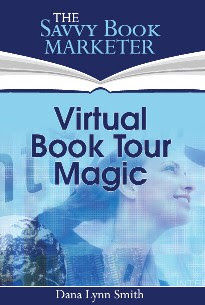
Virtual Book Tour Magic coverToday's guest post from Dana Lynn Smith, The Savvy Book Marketer, is part of the virtual book tour for her newest book marketing guide, Virtual Book Tour Magic.

With a virtual book tour, authors can reach a large targeted audience of potential book buyers by making guest appearances on blogs, podcasts, radio shows and other venues.

Organizing a virtual book tour isn't hard, but it does take good organization. Here is a list of the steps involved in planning a virtual book tour:

  • Before you start, have basic promotional tools in place, including a blog and social networking accounts.
  • Begin planning at least two months in advance of the tour.
  • Determine your goals for the tour and the type of tour you want to do.
  • Determine the length of the tour and tour dates.
  • Set up a recordkeeping system to keep track of the details for planning the tour.
  • Decide what kind of content, giveaways or contests to offer on the tour.
  • Make a list of prospective hosts and research them to find the best fit.
  • Write a compelling invitation and send it to the top prospective hosts.
  • Correspond with hosts, sending confirmations and details.
  • Set up a schedule of tour stops, assigning hosts to specific dates.
  • Develop a promotional plan and materials for the tour and begin pre-tour promotions.
  • Write articles and interview questions and send to hosts.
  • Monitor and promote daily during the tour.
  • Coordinate giveaways and contests.
  • Evaluate the success of the tour and take care of follow up tasks.

There you have it - the steps to organizing your own successful virtual book tour. Learn more about the details of planning a book tour in my new Virtual Book Tour Magic guidebook for authors.

Book Tour Special: Order Virtual Book Tour Magic by December 12 and you'll get an invitation to an exclusive book tour Q&A session with Dana on December 15.

 id=About the Author: Dana Lynn Smith (right), The Savvy Book Marketer, helps authors and indie publishers learn how to sell more books through her how-to guides, blog, newsletter, and private coaching. For more book promotion tips, get her free Top Book Marketing Tips ebooks at www.TheSavvyBookMarketer.com.

* * *

Many thanks to Dana for sharing her tips in this post as part of her Virtual Book Tour.

I will be reviewing Virtual Book Tour Magic on this blog on Monday 12 December, but I'm probably not giving away too much to say that I was hugely impressed with it.

You can also read my reviews of these other guides by Dana by clicking on the appropriate title in the list below:

How to Get Your Book Reviewed

Twitter Guide for Authors

Facebook Guide for Authors

If you have any comments or questions for Dana (or me), as ever, please feel free to leave them below!


How to Plan a Successful Virtual Book Tour

Virtual Book Tour Magic coverToday's guest post from Dana Lynn Smith, The Savvy Book Marketer, is part of the virtual book tour for her newest book marketing guide, Virtual Book Tour Magic.

With a virtual book tour, authors can reach a large targeted audience of potential book buyers by making guest appearances on blogs, podcasts, radio shows and other venues.

Organizing a virtual book tour isn't hard, but it does take good organization. Here is a list of the steps involved in planning a virtual book tour:

  • Before you start, have basic promotional tools in place, including a blog and social networking accounts.
  • Begin planning at least two months in advance of the tour.
  • Determine your goals for the tour and the type of tour you want to do.
  • Determine the length of the tour and tour dates.
  • Set up a recordkeeping system to keep track of the details for planning the tour.
  • Decide what kind of content, giveaways or contests to offer on the tour.
  • Make a list of prospective hosts and research them to find the best fit.
  • Write a compelling invitation and send it to the top prospective hosts.
  • Correspond with hosts, sending confirmations and details.
  • Set up a schedule of tour stops, assigning hosts to specific dates.
  • Develop a promotional plan and materials for the tour and begin pre-tour promotions.
  • Write articles and interview questions and send to hosts.
  • Monitor and promote daily during the tour.
  • Coordinate giveaways and contests.
  • Evaluate the success of the tour and take care of follow up tasks.

There you have it - the steps to organizing your own successful virtual book tour. Learn more about the details of planning a book tour in my new Virtual Book Tour Magic guidebook for authors.

Book Tour Special: Order Virtual Book Tour Magic by December 12 and you'll get an invitation to an exclusive book tour Q&A session with Dana on December 15.

About the Author: Dana Lynn Smith (right), The Savvy Book Marketer, helps authors and indie publishers learn how to sell more books through her how-to guides, blog, newsletter, and private coaching. For more book promotion tips, get her free Top Book Marketing Tips ebooks at www.TheSavvyBookMarketer.com.

* * *

Many thanks to Dana for sharing her tips in this post as part of her Virtual Book Tour.

I will be reviewing Virtual Book Tour Magic on this blog on Monday 12 December, but I'm probably not giving away too much to say that I was hugely impressed with it.

You can also read my reviews of these other guides by Dana by clicking on the appropriate title in the list below:

How to Get Your Book Reviewed

Twitter Guide for Authors

Facebook Guide for Authors

If you have any comments or questions for Dana (or me), as ever, please feel free to leave them below!